
Amazon vs. Perplexity: Why E-Commerce Sites Need to Evolve Now
How AI agents are neutralising the cognitive biases that e-commerce giants have spent billions of dollars and decades perfecting.

What happens when AI becomes an extension of you?
Truly, let’s think it over for a few seconds.
An AI that’s encapsulated with all the data about you. A tool that is fully capable of scraping the web with the pattern of you in their mind, not only to bring you the information you’re searching for , but also act on it by being able to do what you want with it.
That’s Perplexity’s Comet AI. It’s a browser that acts as your personal assistant to do everyday task from summarising your web results through even integrating with your personal calendar and emails to give you a personal answer. But one of the biggest reasons it’s in the news today is it’s ability to shop for its users.
With all the new LLMs and AI tools being thrown around right now, along with an AI bubble that so many are speculating will burst. It’s bound to have some AI wars clashing. I just wouldn’t have bet it would have started with the e-commerce industry where Amazon decided to stop Perplexity’s Comet AI from disrupting the entire online shopping experience.
The Amazon versus Perplexity debacle
In November 2025, Amazon publicly launched a cease-and-desist letter against Perplexity’s Comet AI. In this letter, Amazon states:
And how:
Whereas Perplexity has countered these claims by saying:
“Easier shopping means more transactions and happier customers. But Amazon doesn’t care. They’re more interested in serving you ads, sponsored results, and influencing your purchasing decisions with upsells and confusing offers.”
Current E-Commerce & Psychology
Why is Amazon really mad? And enough to even put through a public dispute about it.
To understand that, you have to reflect on your current online shopping experience. Let’s say you want to buy new running shoes. You search for different brands, go on Reddit forums, and maybe even watch a couple of YouTube videos about it. You eventually get an ad for Asics on your Instagram page or a Hoka shorts ad on your YouTube channel. Either way, you’re getting inundated with ads.
Enough time passes by, and you’re ready to buy a pair online. You either go to your favourite store or browse the Amazon page until you finally pick the running shoes you like. Then you see that you might also want a hat that goes with your run, or even the latest Oura ring, which can track your performance. You find you only have 1 day to buy it during the sale, so you just get the mid-tier version because the $600 price tag was too much.
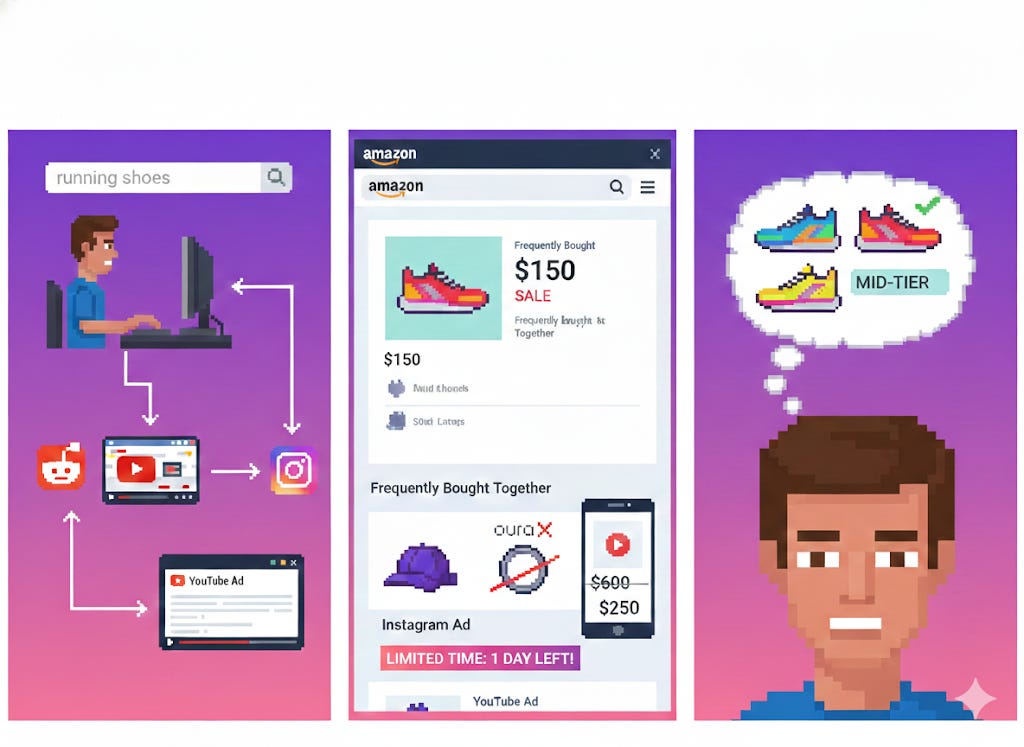
From that customer journey, we just looked into a couple of concepts that affect your buying psychology:
Retargeting or Re-marketing: Using your browser cookies, brands are able to target ads for you as you’ve become their ideal customer. You start seeing ads everywhere you go, from Instagram Reels to Facebook Ads.
Omnichannel Marketing: The strategy of creating a seamless brand experience across every platform you engage with. Whether you are on your laptop, your phone, or watching an app on your TV, the brand ensures its messaging, pricing, and aesthetic are identical.
Both tactics create a Frequency Illusion (Baader-Meinhof Phenomenon), which basically makes you notice running shoes everywhere you go. And because you are seeing the ads more often, your brain starts to believe the product is more popular or trending than it actually is, which increases your trust in the brand.
Other tactics that also came up include:
Cross-Selling: Where the online store suggests other related products that complement your purchase (eg. The oura ring to track your pace with your new running shoes)
Upselling: Showing you a more expensive alternative to the item
Product Bundling: The whole “Frequently Bought Together” section, where it feels incomplete if you don’t buy the accessories with your running shoes
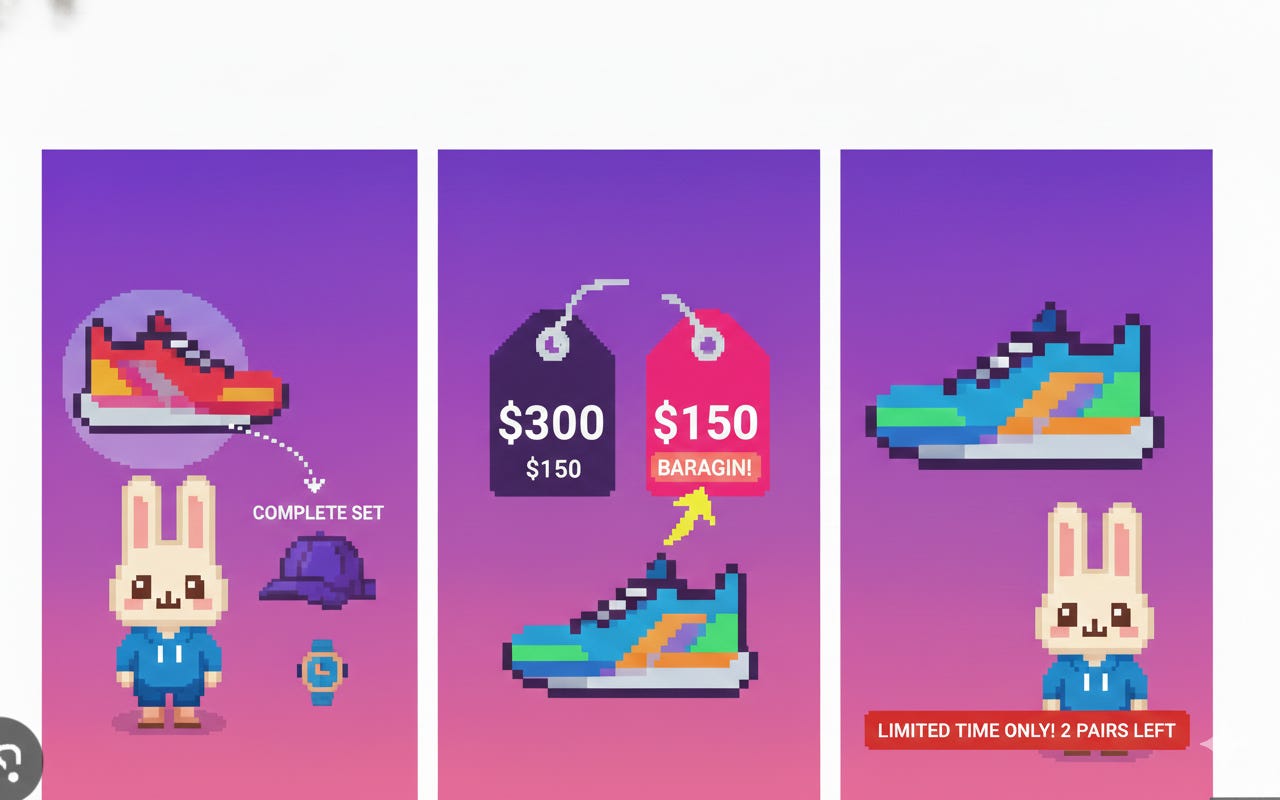
Different psychological triggers: 1. Completion Bias, 2. Anchoring Bias, and 3. Loss Aversion
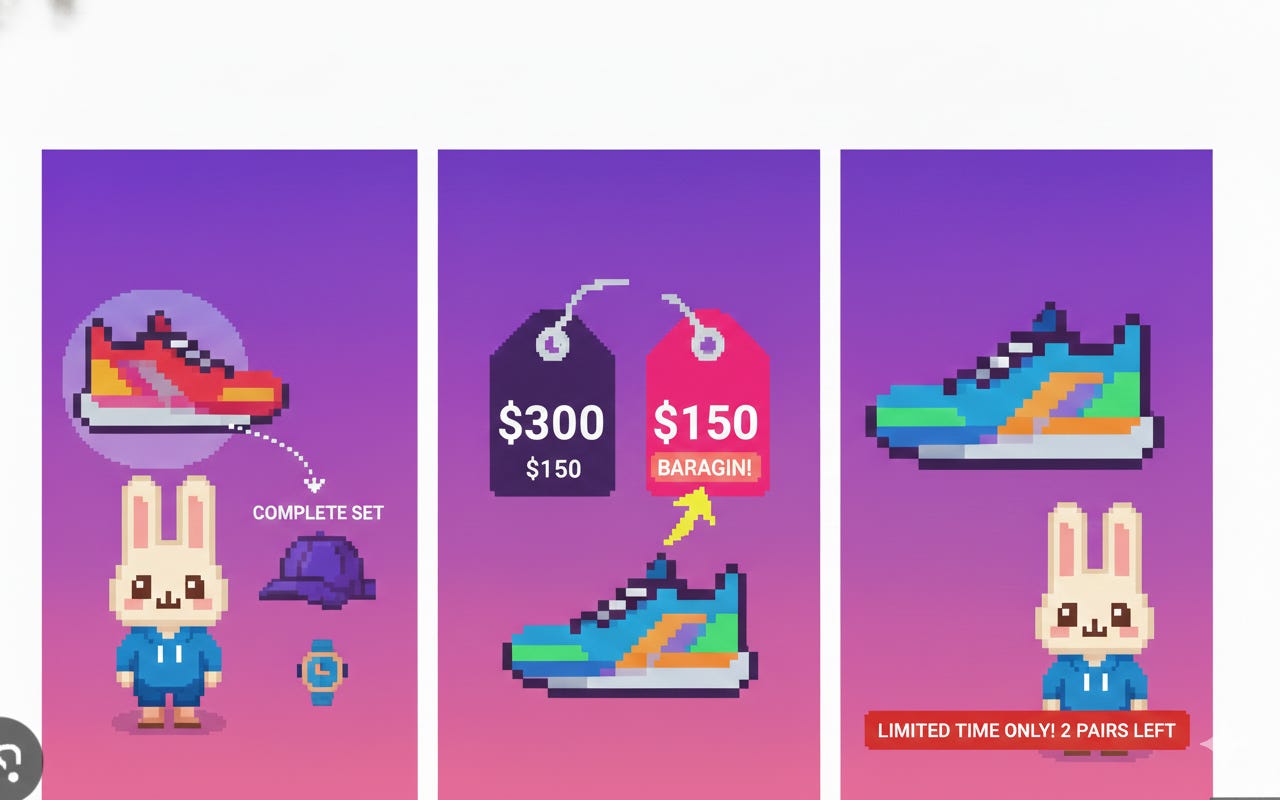
These latter tactics triggering a couple of psychological experiences including completion bias (making you believe buying a hat with your running shoes would make your experience more of a complete set), anchoring bias (using a premium price like ($300 shoes) to make the mid-tier price ($150) more of a bargain), and loss aversion (the warning triggers of having “2 pairs left” which creates a sense of urgency).
All of which are currently experienced in today’s e-commerce world.
ELI5 why Amazon is “big mad”
Now, let’s say all of that is lost when you can just use your personal AI secretary to use your parameters that you’ve set to find those shoes and bring the best options without you ever leaving your page. That means, these e-commerce sites would not have had a chance to upsell or cross-sell any products, and ad spendings go lower because you didn’t need to see many ads.
When AI becomes your personal buyer, you don’t need to ever set foot on their domain. That means, no need for you to be tempted by other products. Resulting in less money for the merchant.
And that is bad for Amazon’s business.
Amazon’s search results are packed with sponsored or high-ticket items. Whereas AI agents ignore them. If you stop visiting Amazon and start just telling your AI to buy, Amazon loses its brand loyalty. At the same time, there’s no way to really control these AIs from going to certain online stores through ads; people are still figuring out how to use SEO to get AIs to come to them.
What Amazon and other e-commerce stores stand to lose when they don’t evolve?
The Marketplace UX Aisle - Have you noticed how big e-commerce sites like Amazon, Etsy, and Temu bundle their products or place sponsored results at the top of the page? If AI starts buying from you, they will just bypass these deals or bundles, making them redundant and reducing their Average Order Value (AOV). This kills the cross-selling and product bundling method we discussed earlier.
Disrupting Placement Ad Revenue: Related to the above, e-commerce can act like grocery stores. And in grocery stores, brands can purchase store placements or locations to provide more foot traffic to the items they’re selling. And that’s also happening in e-commerce sites, where sponsored products are also added at the top of the search results. This becomes a major issue when a large share of Amazon’s profits comes from Retail Media (merchants pay to be at the top of search results).
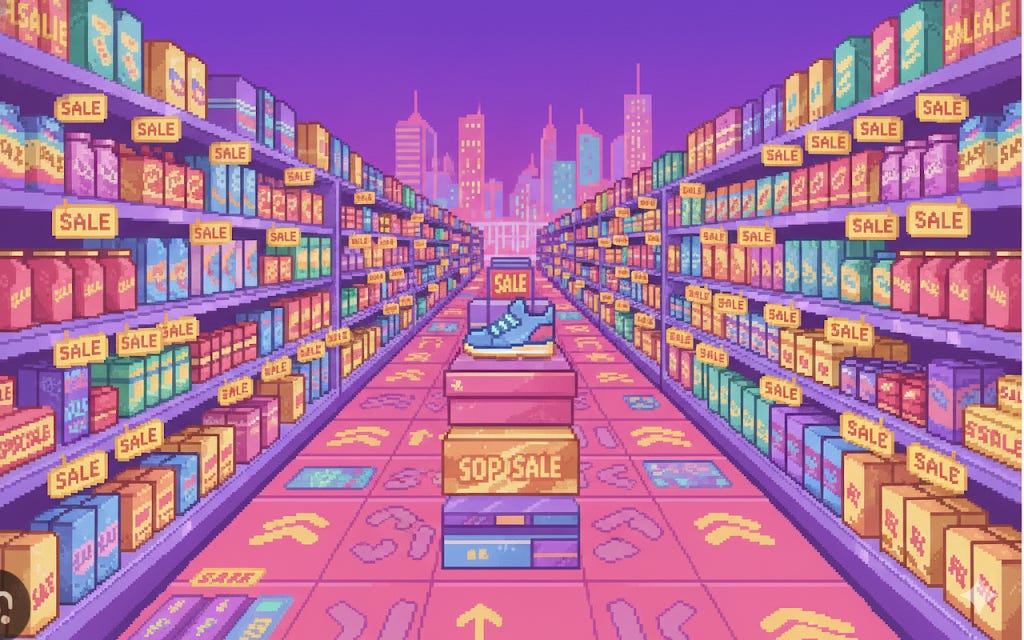
How retail can gain revenue from item placements No More Anchoring - Earlier, we talked about how people would look at an initial product’s high prices to determine that another one is actually a bargain. But now, AIs are acting within their parameters, and buyers would no longer be exposed to these practices, removing that leverage.
The Next Episode: Hold Up, So What’s E-commerce Doing Now?
This brings us to the ultimate question: If the AI becomes more sophisticated and all these billion-dollar psychological toolkits of e-commerce are suddenly neutralised, what happens next?
Amazon isn’t just going to pack up and go home. Small and mid-sized businesses still need to sell their products. But as we’re entering a new chapter of the AI Wars, the battlefield is moving from the screen to the system. Here is how the next few years look for what might happen in the new era:
Pivoting Away from SEO to… AEO?
For twenty years, brands have focused on SEO (Search Engine Optimization), trying to rank high for humans who click on blue links. But now, there’s a movement happening to AEO (Answer Engine Optimization), which is the practice of structuring content to appear directly in AI answers, voice searches, and featured snippets. That means brands are rewriting their websites not just to be pretty for you (the average buyer), but also be digestible for AI.Hyper-Branding as a Survival Strategy
The other side is doubling down hard on the storytelling and the human aspect. If AI agents make decisions based on raw data (price, material, speed), brands lose their power. To fight back, they will lean into emotional moats that a robot can’t easily quantify, such as community, connections, and identity. Brands will lean heavily towards the Apple tactic and start competing on identity. You don’t buy an Oura ring for the sensor; you buy it for the biohacker lifestyle. AI can find you a sensor, but it can’t find you a tribe.
Ultimately, the goal for retailers remains the same: getting customers to hit order. Whether they use a flashy ad to convince your eyes or an optimized data packet to convince your AI. The battle for the buyer’s attention and wallet is ever-evolving.
Insightful. What if the 'pattern of you' inadvertantly stifles new product discovery?